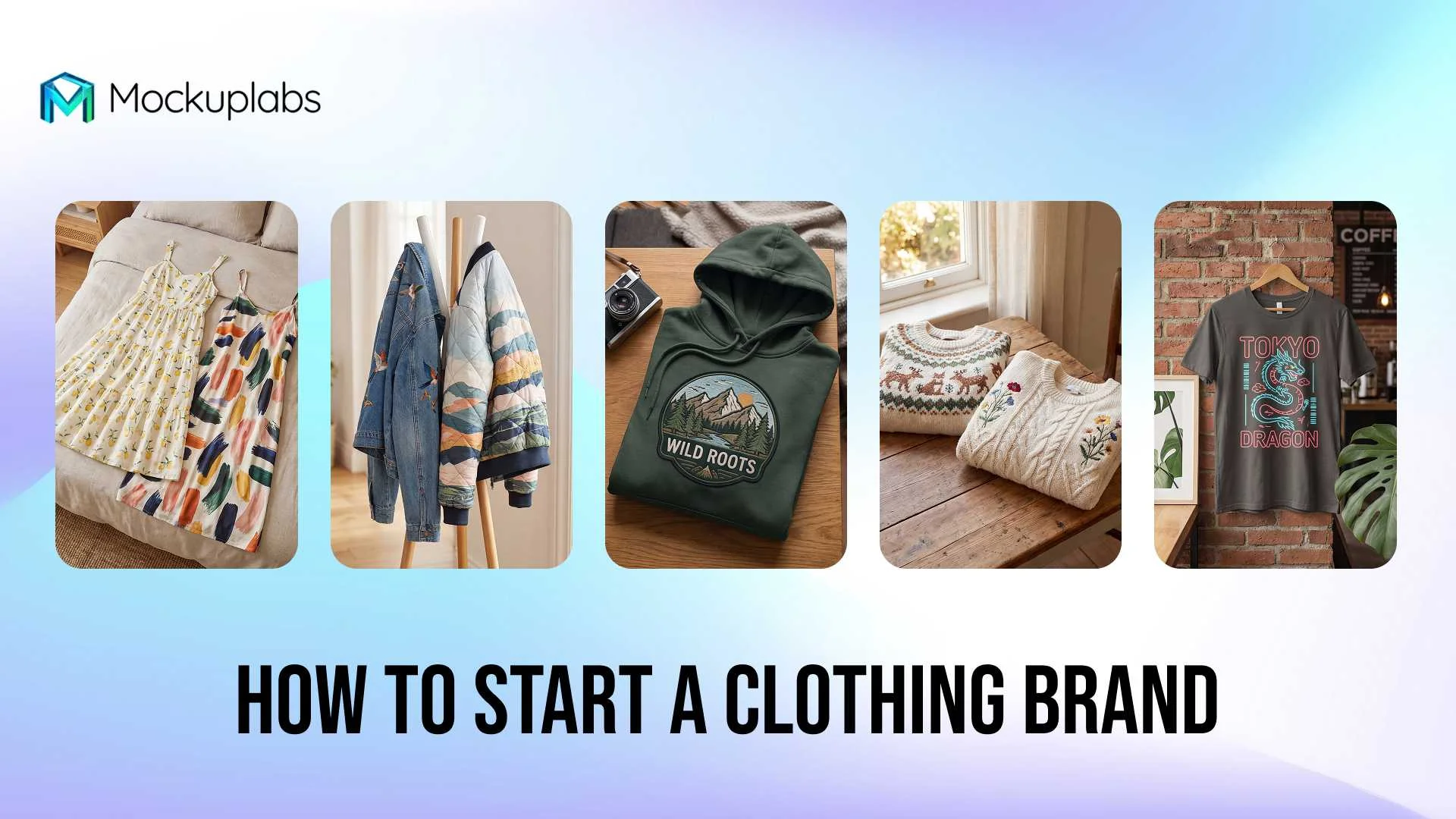
How to start a clothing brand requires strategic planning, creative vision, and leveraging modern tools to compete effectively. Whether you're testing your first clothing business concept or launching your signature collection, understanding brand development, product visualization, and market positioning is essential.
Modern online mockup generator technology and print-on-demand services have made how to make a clothing brand more accessible than ever.
This guide covers everything from market research to scaling operations, ensuring you launch with confidence and clarity.
Table of Contents
- Define Your Target Market
- Choose Your Business Model
- Build Brand Identity
- Design Your Collection
- Create Professional Mockups
- Launch Your Online Store
- Execute Your Marketing Strategy
- Conclusion
- FAQs
Define Your Target Market
Identifying your target audience shapes every business decision moving forward. Furthermore, understanding who will purchase your products informs design aesthetics, pricing strategy, and marketing channels.
Research potential customers' demographics, lifestyle preferences, and shopping behaviors across social media platforms. Tools like Google Trends, Instagram, and TikTok provide invaluable insights into emerging preferences and seasonal demand patterns. Additionally, analyze competitor offerings to identify market gaps and unmet customer needs.For example, if all established brands focus on standard sizing, launching an inclusive size range could become your unique selling proposition.
Once you've identified your niche, create detailed buyer personas including age, income, values, and preferred shopping channels.
Choose Your Business Model
Two primary models dominate clothing entrepreneurship: Print on Demand (POD) and traditional manufacturing.
Print on Demand
Key advantages include:
- Minimal startup investment (often under $500)
- No inventory management headaches
- Unlimited design testing and iterations
- Scalability without proportional cost increases
- Access to diverse product categories instantly
The primary trade-off is lightly lower profit margins per unit compared to traditional manufacturing, though the risk reduction often compensates for this difference.Slightly lower per-unit profit margins.
Traditional Manufacturing
Benefits of this model include:
- Premium profit margins (often 50-70% vs. 30-40% for POD)
- Full customization of fabrics, fit, and details
- Stronger brand identity through signature pieces
- Wholesale and retail partnership opportunities
- Economies of scale as volume increases
Choose POD for testing concepts; select traditional manufacturing when committed to long-term, premium-positioned brands.
Build Brand Identity
Your brand transcends logos—it represents the emotional connection customers feel wearing your clothing.
Defining Your Brand Values and Purpose
Start with introspection. Why does your brand exist? What problem does it solve or what feeling does it evoke? What lifestyle do your products represent?
Crafting Your Brand Voice and Visual Identity
Develop a consistent brand voice across all communications and create a cohesive visual identity including a memorable logo, 2-3 primary brand colors, and typography.
Choosing Your Brand Name and Story
Subsequently, craft a compelling origin story that connects emotionally with your audience, transforming your brand from a product supplier into a meaningful lifestyle choice.
Design Your Collection
Strong designs are your brand's heartbeat. Therefore, start with one or two signature pieces—custom t-shirts, hoodies, or sweatshirts—that encapsulate your brand vision. Moreover, beginning narrow allows perfecting fit and messaging before expanding.
Study fashion publications and social media trends, filtering inspiration through your brand lens. Use design tools like Canva or Adobe Creative Suite, or hire freelancers specializing in apparel design. This strategic foundation prevents costly production mistakes.
Create Professional Product Mockups
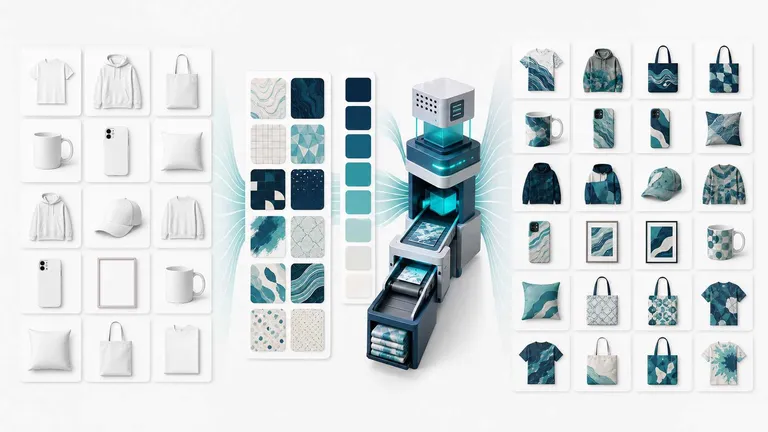
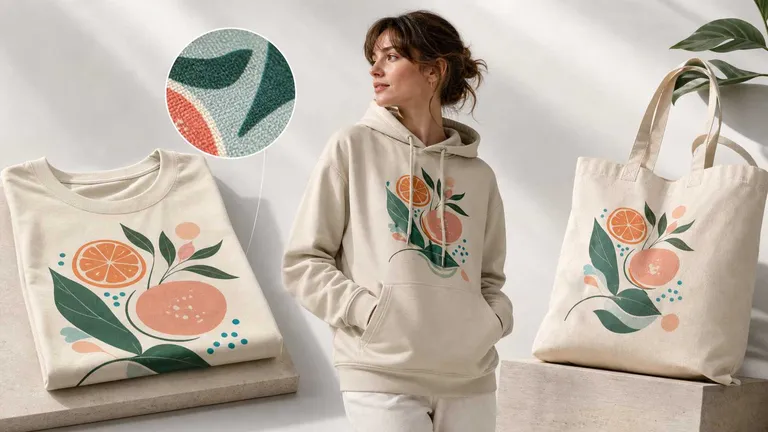
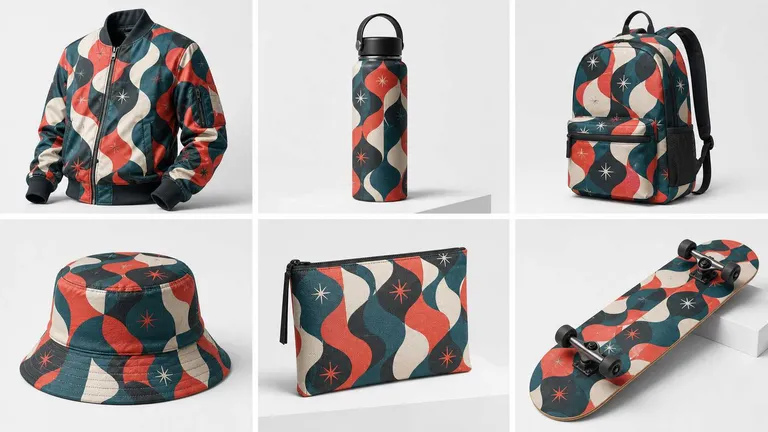
Professional mockups transform flat designs into realistic product previews, essential for both internal decision-making and customer confidence. Consequently, utilize advanced clothing mockup tools that convert product images into editable mockups with unrestricted design placement.
With an intuitive mockup generator, upload your product image (PNG or JPG), convert it into an editable mockup, then drag and drop designs onto any garment surface. The design automatically adapts to product curves and lighting, creating presentation-ready images within minutes.
Visualize Your Entire Product Line
Template Library with 20,000+ Professional Mockups
Explore Our Template Library →
Launch Your Online Store
Your online store is your digital storefront where customers discover and purchase your clothing. Therefore, platform selection directly impacts conversion rates and brand perception.
Popular platforms like Shopify provide seamless print-on-demand integration, automated order fulfillment, and built-in payment processing. Customize your store with your logo, brand colors, and high-quality product imagery. Include essential pages: "About Us," shipping policies, contact information, and FAQ sections addressing common questions.
After launching your online store, consider integrating AI clothes virtual try-on to enhance your page engagement and loyalty. Perfect Corp.'s YouCam AI API solution supports fashion eCommerces to integrate the feature with API access leveraging flexible usage-based price plan.
Execute Your Marketing Strategy
Strong products require effective marketing to reach your target audience. Therefore, develop a multi-channel strategy spanning content, social media, and paid advertising.
Publish valuable fashion content optimizing for search terms like "how to start a clothing business" and "clothing mockup generator" to capture organic traffic. Share compelling visual content on Instagram and TikTok showcasing designs in lifestyle contexts. Additionally, build your email list offering exclusive discounts and early access to new collections.
Conclusion
Launching a successful clothing brand requires strategic planning, creative excellence, and market adaptability. Modern tools and accessible business models have democratized fashion entrepreneurship in unprecedented ways. Focus on understanding your target market deeply, communicating your brand story authentically, and maintaining commitment to quality. Start small, gather customer feedback, and scale methodically based on proven success. Whether leveraging print-on-demand for rapid testing or traditional manufacturing for premium positioning, success depends on your willingness to learn and improve continuously. Your clothing brand's success ultimately rests on delivering value, building community, and staying true to your vision.
FAQs
1.How much does it cost to start a clothing brand?
Print-on-demand launch costs under $500 covering domain, logo, and marketing. Traditional manufacturing typically requires $5,000-$50,000+ depending on volume and materials. Most successful brands start lean with POD, testing concepts before larger manufacturing investments.
2.Do I need fashion design experience to start a clothing brand?
No. Many successful entrepreneurs collaborate with freelance designers or use user-friendly platforms. Your primary strength should be understanding your market and communicating your vision clearly.
3.How do I protect my clothing designs?
Register copyrights for original artwork and design elements with your country's copyright office. Use watermarks on design images shared publicly, maintain detailed documentation of your creative process, and consider trademark registration for your brand name and logo. Consult with an intellectual property attorney for comprehensive protection strategies specific to your jurisdiction.